5 Ways to Cook With Rock Salt
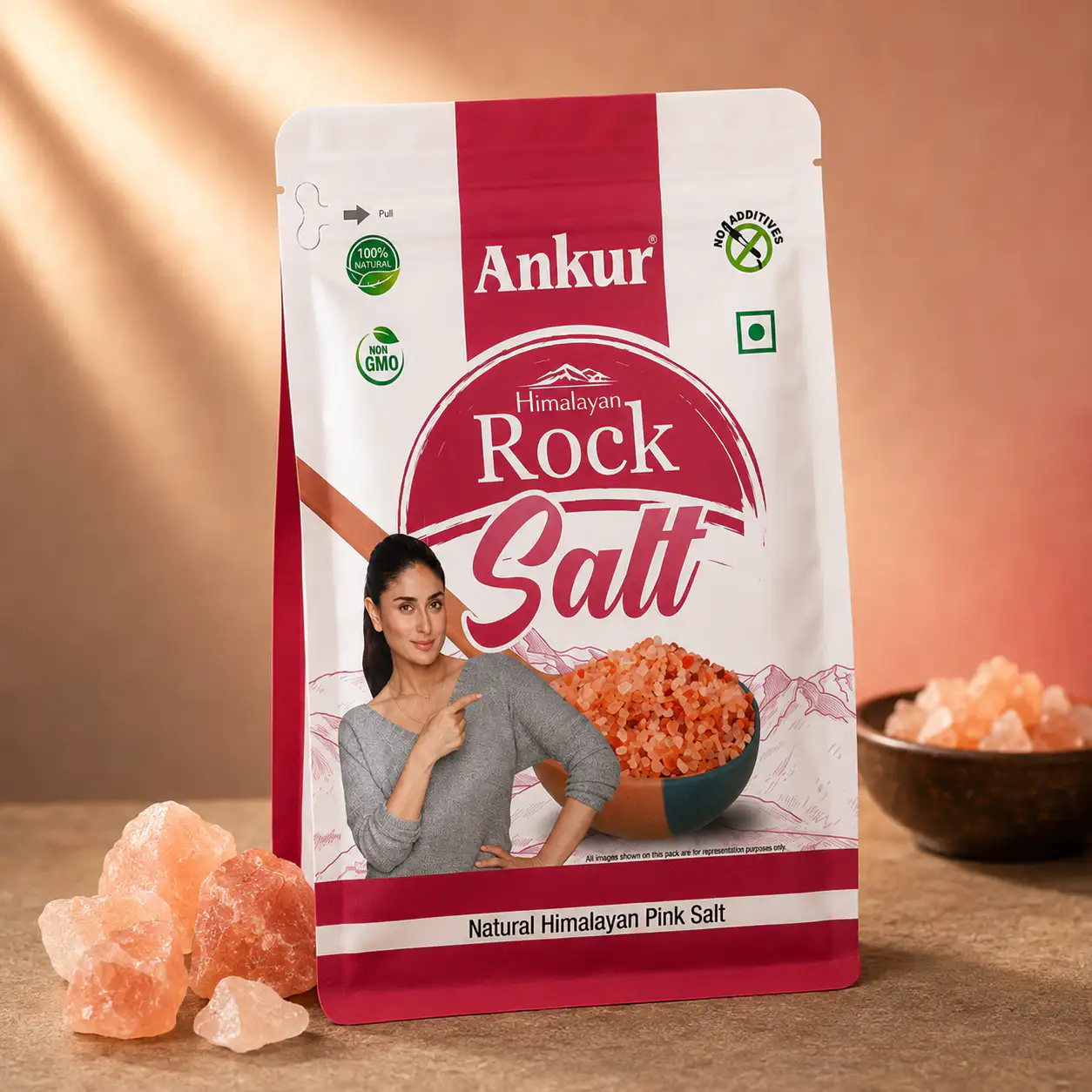
Ankur Rock Salt, or sendha namak, shows up in most Indian kitchens once a year for Navratri and then goes back in the cupboard. That's a shame, because its natural, unrefined character makes it useful well beyond fasting season.
What makes rock salt different
Unlike our refined, iodised ranges, Ankur Rock Salt is natural and unrefined, around 85 to 90% sodium chloride with naturally occurring trace minerals like iron, potassium and magnesium. No iodine is added. That's exactly why it's the traditional choice for fasting and religious offerings, and why it tastes noticeably milder than table salt.
1. Vrat and fasting recipes
This is its best-known role, the traditional choice for Navratri, Ekadashi and other fasting occasions, used in place of iodised salt in vrat-friendly dishes like sabudana khichdi and kuttu ka atta puris.
2. As a finishing salt
Its milder, more mineral flavour works well sprinkled over grilled vegetables or roasted potatoes just before serving, where you taste the salt itself rather than cooking it into the dish.
3. In pickling and preserving
Rock salt's coarser, natural crystal is a common choice for home pickling, where a milder, unrefined salt is preferred to a heavily processed one.
4. For religious offerings and prasad
Used in rituals and traditional ceremonies for generations, it remains the default choice for prasad and religious offerings across much of India.
5. In Ayurvedic cooking
Valued in Ayurvedic practice specifically for its natural, unrefined form, it's often the salt of choice in Ayurvedic kitchens for everyday, milder recipes.
The bottom line
Rock salt doesn't need to be a once-a-year ingredient. Keep a pack in rotation alongside your everyday iodised salt, and reach for it whenever a recipe calls for something milder and more mineral.